

Roof Waterproofing Failure: Causes and Solutions
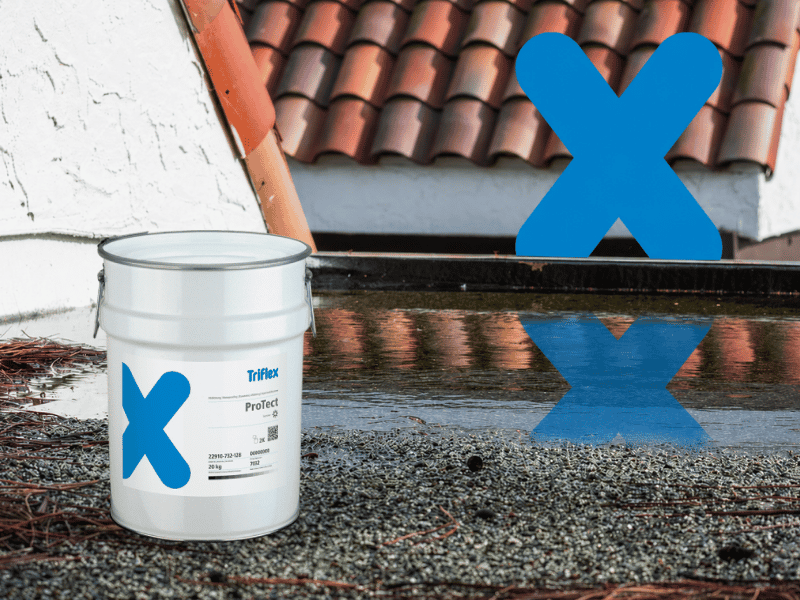
Roof leaks rarely happen because of one single event. More often, they are the result of repeated exposure to rain, humidity, heat, UV radiation, trapped moisture, structural movement and weak detailing over time.
A roof may look fine from the outside, but once water enters through a failed joint, cracked membrane, poorly sealed penetration or damp substrate, the damage can spread beneath the surface long before it becomes visible indoors.
That is why recurring roof leakage should not be treated as a simple surface problem.
For property owners, facility managers, contractors, architects and building maintenance teams, the real question is not only:
“Where is the leak?”
The better question is:
“Why did the waterproofing system fail in the first place?”
This article explains the most common reasons roof waterproofing fails in Singapore’s tropical climate, how to identify the root cause, and how Triflex Asia supports long-term roof protection through liquid-applied waterproofing systems such as Triflex ProTect, Triflex SmartTec and Triflex ProDetail.
Quick Answer: Why Does Roof Waterproofing Fail in Singapore?
Roof waterproofing fails in Singapore because roofs are exposed to frequent heavy rain, high humidity, UV radiation, thermal movement, ponding water and poor drainage. Failures often happen at weak details such as joints, upstands, pipe penetrations, gutters, parapets, metal roof seams and previous repair areas. If the system is not fully bonded, properly reinforced or suitable for the substrate condition, water can travel beneath the waterproofing layer and cause recurring leaks.
Why Singapore’s Climate Is Tough on Roofs
Singapore’s tropical climate creates a demanding environment for roof waterproofing systems.
Roofs are exposed to:
Frequent heavy rainfall
High humidity
Strong UV exposure
Heat build-up on roof surfaces
Repeated wet-dry cycles
Ponding water on flat or low-slope areas
Movement caused by temperature changes
Moisture trapped inside existing substrates
In this environment, waterproofing cannot rely only on a surface coating or a quick repair.
It needs to be selected based on the roof type, substrate condition, movement, drainage, existing layers and project use.
This is especially important for commercial buildings, industrial facilities, malls, schools, private homes, car parks and roof terraces, where downtime, safety and long-term maintenance costs matter.
1. Poor Surface Preparation
One of the most common reasons roof waterproofing fails is poor substrate preparation.
A waterproofing system can only perform properly if it bonds to a stable, clean and suitable surface.
Before waterproofing, the substrate should be checked for:
Dust
Oil
Loose concrete
Moisture
Old coatings
Cracks
Failed membranes
Poor adhesion
Contaminants
Hollow or weak areas
If these are not addressed, the new system may bond to the failed layer instead of the real structure below.
That means the repair can look complete on day one, but still fail later when water, heat or movement attacks the weak substrate underneath.
What should be done instead?
A proper roof waterproofing project should begin with substrate inspection, moisture checks, adhesion assessment and suitable pre-treatment.
For roofs with damp or moisture-sensitive conditions, system selection becomes even more important.
Triflex SmartTec, for example, is designed for waterproofing where damp mineral substrates or moisture exposure are part of the project challenge. This makes it especially relevant for refurbishment works where the roof cannot always be brought to ideal dry conditions before repair.
2. The Wrong System for the Roof Type
Not every roof needs the same waterproofing system.
A flat concrete roof, metal roof, glass roof, roof terrace, green roof, roof walkway and roof detail area all behave differently.
A system that works for one roof type may fail on another if it cannot handle the surface material, movement, moisture level or exposure.
Common mismatch examples include:
Using a rigid system on a moving structure
Using standard sealant on high-movement joints
Applying a system that cannot tolerate ponding water
Using a membrane that struggles around complex details
Covering a damp substrate with a system that traps moisture
Treating only the open roof surface while ignoring joints and penetrations
What should be done instead?
The system should be selected based on the actual roof condition.
For example:
Triflex ProTect is suitable for reinforced roof waterproofing across roof surfaces and details.
Triflex SmartTec is suitable for damp substrate and structure waterproofing conditions.
Triflex ProDetail is suitable for joints, penetrations, flashings, upstands and complex roof details.
Triflex ProSolar is suitable where reflective, UV-resistant roof waterproofing and heat reduction are important.
The goal is not to choose one product for every roof.
The goal is to choose the right system for the problem.
3. Weak Detailing Around Joints and Penetrations
Many roof leaks do not start in the middle of the roof surface.
They start at the details.
These areas are more vulnerable because they involve changes in surface direction, material transitions, movement or small openings.
Common weak points include:
Pipe penetrations
Parapet walls
Upstands
Gutters
Drain outlets
Skylight and glass roof edges
Metal roof seams
Roof vents
HVAC supports
Expansion joints
Interfaces between different materials
Door or wall junctions on roof terraces
When these details are treated with generic sealants or patch repairs, the leak may return because the underlying movement and water path were not addressed.
Why do details fail?
Details fail because they are exposed to stress from multiple directions:
Rainwater runs toward them
Different materials expand and contract differently
Movement concentrates at joints
Sealants can shrink, crack or lose adhesion
Rigid systems cannot always follow complex shapes
Poorly reinforced corners can become water entry points
What should be done instead?
Details need a waterproofing system that can adapt to complex shapes, bond to the surface and bridge movement.
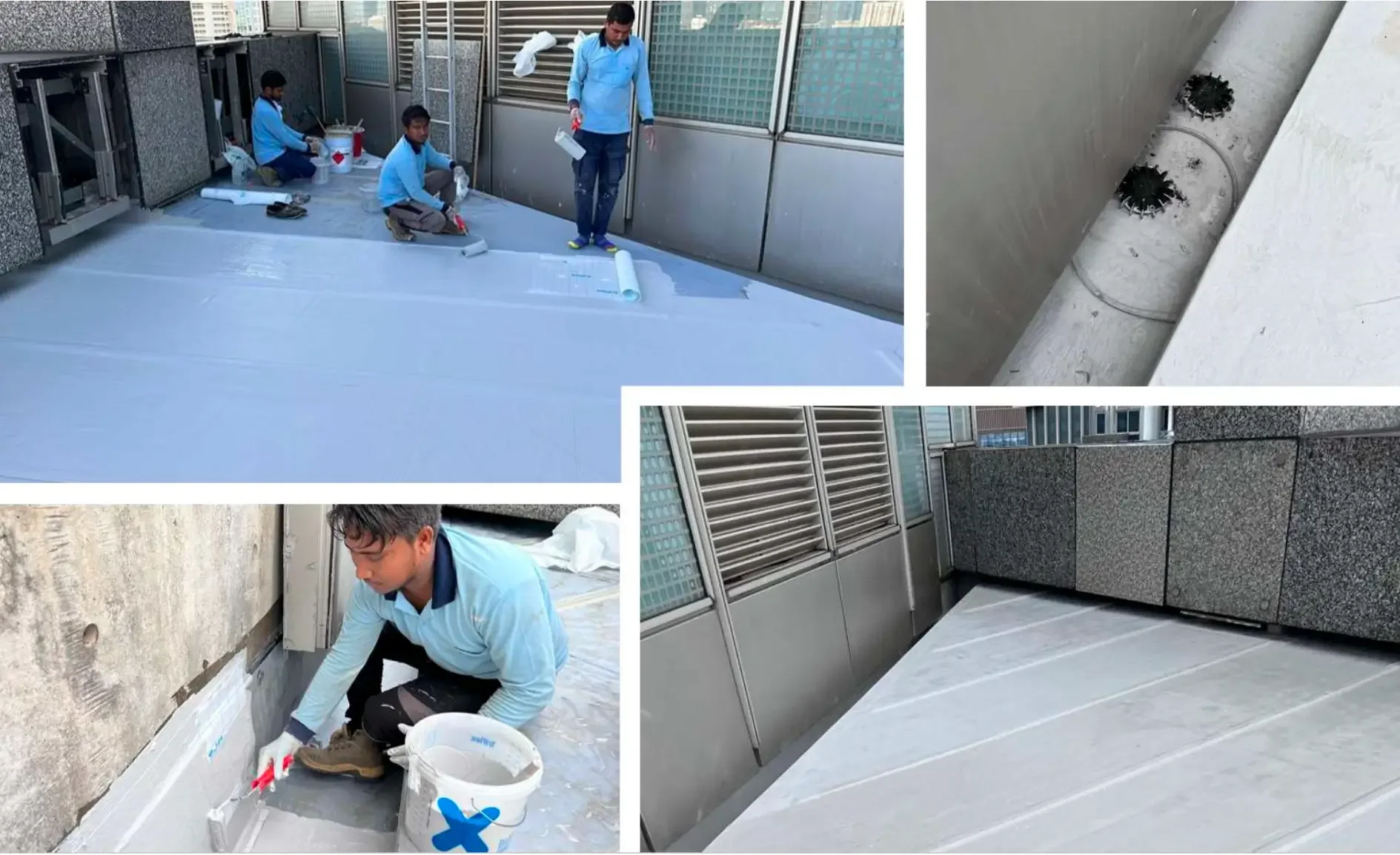
Triflex ProDetail is designed for these areas. As a liquid-applied and fleece-reinforced system, it can form a seamless waterproofing layer around roof joints, penetrations, upstands, flashings and interfaces.
For Singapore roofs, this matters because the smallest untreated detail can become the source of a recurring leak during heavy rain.
4. Ponding Water and Poor Drainage
Flat roofs and low-slope roofs are common in commercial and residential buildings.
But in Singapore, flat roofs are exposed to frequent rain. If drainage is poor, water can remain on the roof for longer periods.
This increases pressure on the waterproofing system.
Ponding water can lead to:
Membrane fatigue
Blistering
Moisture penetration
Algae growth
Faster material degradation
Water migration under failed layers
Higher risk of leaks at weak joints
What should be done instead?
Roof waterproofing should not be assessed separately from drainage.
Before selecting a system, the project team should check:
Roof slope
Drain outlets
Ponding areas
Blocked drains
Existing falls
Overflow routes
Previous repair build-up
Whether standing water resistance is required
Triflex ProTect is suitable for roof waterproofing applications where a reinforced system is needed for exposed roof surfaces, including areas that face demanding weather and standing water conditions.
5. Thermal Movement and Cracking
Singapore roofs expand and contract under daily heat, rain and cooling cycles.
This movement may be small, but over time it can create:
Hairline cracks
Joint opening
Membrane fatigue
Sealant failure
Loss of adhesion
Water pathways beneath the waterproofing layer
Metal roofs are especially sensitive to movement because metal expands and contracts significantly under heat.
Concrete roofs can also crack due to shrinkage, settlement, thermal stress or structural movement.
What should be done instead?
A roof waterproofing system should be able to handle movement.
This is why crack-bridging and reinforcement matter.
Fleece-reinforced liquid-applied systems can help bridge cracks and details while creating a seamless waterproofing layer across the vulnerable area.
For metal roofs, glass roofs and complex roof details, Triflex ProDetail is often relevant because it can adapt around penetrations, joints and interfaces where movement is expected.
6. Repeated Patch Repairs
Patch repairs are common when a leak appears urgent.
But if the cause is not correctly identified, patching can create a cycle:
Leak appears.
Patch is applied.
Water finds another weak point.
Leak returns.
Another patch is added.
Over time, this creates multiple layers of incompatible materials.
This can make future repairs more difficult because the new system may be applied over weak, damp or poorly bonded materials.
Why patch repairs fail
Patch repairs fail when they only treat the visible symptom instead of the root cause.
For example:
The ceiling stain is repaired, but the roof joint remains open
A crack is sealed, but water is entering from a penetration nearby
A coating is applied, but the substrate is damp underneath
A membrane is added, but drainage remains poor
The open area is waterproofed, but the upstands and edges are missed
What should be done instead?
Before approving another roof repair, ask:
Where is the water entering?
Is the visible leak directly below the source?
Are the joints and penetrations protected?
Is the old system still bonded?
Is there moisture trapped underneath?
Is the substrate suitable?
Can the selected system handle movement?
What is the expected service life?
What is the downtime?
Is this a long-term system recommendation or a temporary patch?
This is where technical review becomes important.
7. Incompatible Materials
Many failed roof areas have been repaired with different materials over time.
This may include:
Cementitious coatings
Bituminous membranes
PU coatings
Acrylic coatings
Silicone sealants
Epoxy patches
Torch-on membranes
Metal flashings
Tile or screed overlays
Not all materials bond well to each other.
If compatibility is not checked, a new layer may fail because it does not adhere to the previous surface or cannot move with it.
What should be done instead?
A professional roof waterproofing assessment should check the existing build-up and confirm whether the new system can bond to the substrate.
In many cases, primer selection and substrate preparation are just as important as the waterproofing membrane itself.
This is why Triflex systems are often used together with suitable primers, reinforced membranes and detail systems to create a complete build-up rather than a one-layer repair.
8. Ignoring Roof Interfaces
Roof waterproofing often fails where different building elements meet.
These interfaces may include:
Roof-to-wall junctions
Roof-to-glass interfaces
Metal-to-concrete connections
Expansion joints
Roof slab edges
Drain channels
Parapet corners
Window and façade junctions
Ventilation supports
Equipment bases
These areas are harder to waterproof because they involve different materials and movement patterns.
They also collect water and debris, especially during heavy rain.
What should be done instead?
Interfaces should be treated as high-risk areas.
They need a system that can bond across different materials, follow irregular shapes and provide seamless protection.
Triflex ProDetail is designed for this type of work, while Triflex JWS can be relevant for waterproofing joints in waterproof-concrete components and expansion joint areas.
How Triflex Asia Helps Prevent Roof Waterproofing Failure
Triflex Asia supports roof waterproofing projects with liquid-applied, cold-applied systems designed for complex buildings, refurbishment conditions and APAC climate exposure.
The key advantage of Triflex roof waterproofing systems is that they are not limited to flat, simple surfaces.
They can be used across:
Flat roofs
Metal roofs
Roof terraces
Roof walkways
Green roofs
Glass roof interfaces
Roof penetrations
Joints and details
Damp substrate conditions
Refurbishment projects
Commercial and industrial buildings
Triflex ProTect
Triflex ProTect is used for reinforced roof waterproofing across roof surfaces and details. It is suitable for flat roof waterproofing, roof refurbishment and areas exposed to demanding weather conditions.
It supports long-term protection where the roof needs a fully bonded, reinforced waterproofing system.
Triflex ProDetail
Triflex ProDetail is used for joints, penetrations, flashings, upstands, interfaces and complex details.
It is especially useful when the leak risk comes from the details rather than the open roof surface.
For roof projects in Singapore, this is critical because many recurring leaks begin at small, high-risk areas.
See how Triflex ProDetails was used to solve the waterproofing issues for an international school.

Triflex SmartTec is suitable for structure waterproofing and damp substrate conditions.
It is useful for refurbishment projects where moisture levels are high or where a conventional system may struggle with substrate moisture.
Triflex ProSolar
Triflex ProSolar provides reflective, UV-resistant roof waterproofing for projects where heat reduction, roof protection and solar roof performance are important.
This can be especially relevant for exposed roofs in Singapore and APAC, where UV and heat build-up place additional stress on waterproofing systems.
Signs Your Roof Waterproofing May Be Failing
Look for these warning signs:
Ceiling stains
Damp patches
Peeling paint
Mould smell
Water dripping after rain
Blistering roof membrane
Cracked coatings
Open joints
Failed sealant
Ponding water
Rusting metal roof details
Loose tiles or roof finishes
Repeated leaks in the same area
Leaks near parapets, pipes or roof drains
If these signs appear, avoid approving another quick patch without a proper technical review.
The visible leak may not be the real source.
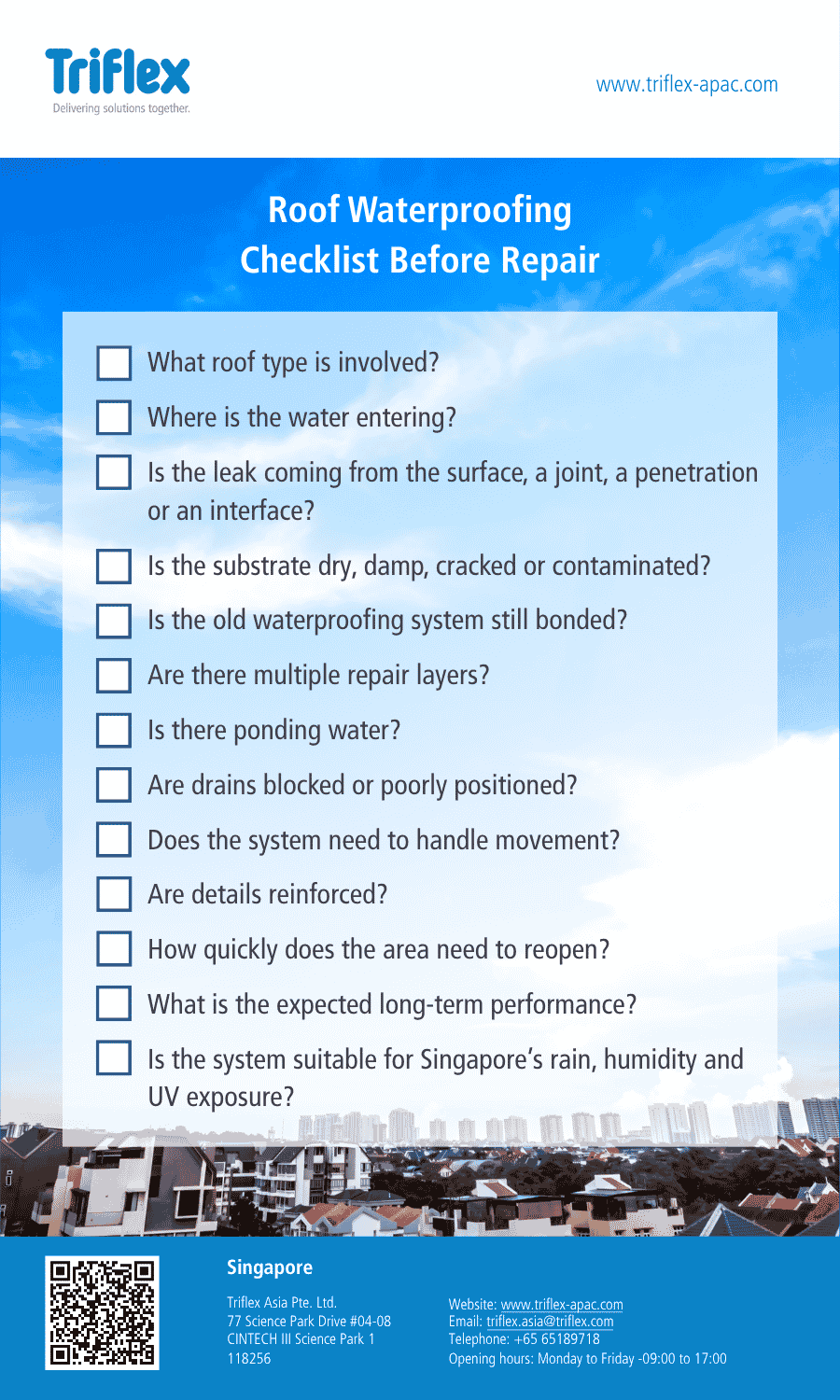
Roof Waterproofing Checklist Before Repair
Before starting roof waterproofing work, check:
What roof type is involved?
Where is the water entering?
Is the leak coming from the surface, a joint, a penetration or an interface?
Is the substrate dry, damp, cracked or contaminated?
Is the old waterproofing system still bonded?
Are there multiple repair layers?
Is there ponding water?
Are drains blocked or poorly positioned?
Does the system need to handle movement?
Are details reinforced?
How quickly does the area need to reopen?
What is the expected long-term performance?
Is the system suitable for Singapore’s rain, humidity and UV exposure?
This checklist helps identify whether the issue needs a surface system, a detail system, a damp substrate solution or a complete waterproofing build-up.
Common Questions About Roof Waterproofing Failure in Singapore
Why do roof leaks keep coming back after repair?
Roof leaks return when the repair only covers the visible symptom instead of the root cause. Common reasons include untreated joints, poor substrate preparation, trapped moisture, incompatible materials, ponding water, structural movement or failed detailing.
What is the best waterproofing system for flat roofs in Singapore?
The best waterproofing system depends on the substrate, drainage, moisture condition, roof use and exposure. In many commercial and refurbishment projects, cold liquid-applied, reinforced systems such as Triflex ProTect can be suitable because they create seamless, fully bonded protection across roof surfaces and details.
Why do roof waterproofing membranes fail?
Membranes fail because of UV exposure, heat, ageing, ponding water, poor adhesion, trapped moisture, cracks, lack of reinforcement, mechanical damage or incorrect application. Failure often starts at joints, edges, penetrations and interfaces.
Can waterproofing be applied over an old roof membrane?
Sometimes, but only after inspection. The existing membrane must be stable, clean, compatible and properly bonded. If the old layer is loose, damp, cracked or contaminated, applying a new layer over it may lead to another failure.
Why are roof details so important?
Roof details are the areas where leaks often begin. Joints, penetrations, upstands, drains, parapets and interfaces experience movement and water concentration. If they are not reinforced and sealed properly, the entire waterproofing system can fail.
What is cold liquid-applied waterproofing?
Cold liquid-applied waterproofing is a system applied in liquid form without hot works. It cures to form a seamless waterproofing membrane that can adapt to complex shapes, details and irregular roof surfaces.
When should I request a technical roof waterproofing review?
You should request a technical review if leaks keep returning, the roof has multiple repair layers, the substrate is damp, drainage is poor, the leak source is unclear, or the roof includes complex details such as penetrations, parapets, metal seams or expansion joints.
Conclusion
Roof waterproofing fails in Singapore when the system is not designed for the real site conditions.
Heavy rain, humidity, UV exposure, ponding water, movement, weak substrates and complex roof details all put pressure on the waterproofing layer.
That is why recurring leaks should not be solved with another quick patch.
They should be reviewed properly.
The right waterproofing system must address the surface, the substrate, the details, the movement and the long-term exposure of the roof.
Triflex Asia supports roof waterproofing projects with proven liquid-applied systems for roof surfaces, damp substrates, joints, penetrations, interfaces and complex refurbishment conditions.
If your roof leak keeps coming back, the next step should not be another temporary repair.
It should be a technical review.
Dealing with recurring roof leaks in Singapore or APAC?
Ask Triflex Asia for a project-specific waterproofing system recommendation. Our team can help assess the roof condition, identify the weak points and recommend the right system for long-term protection.